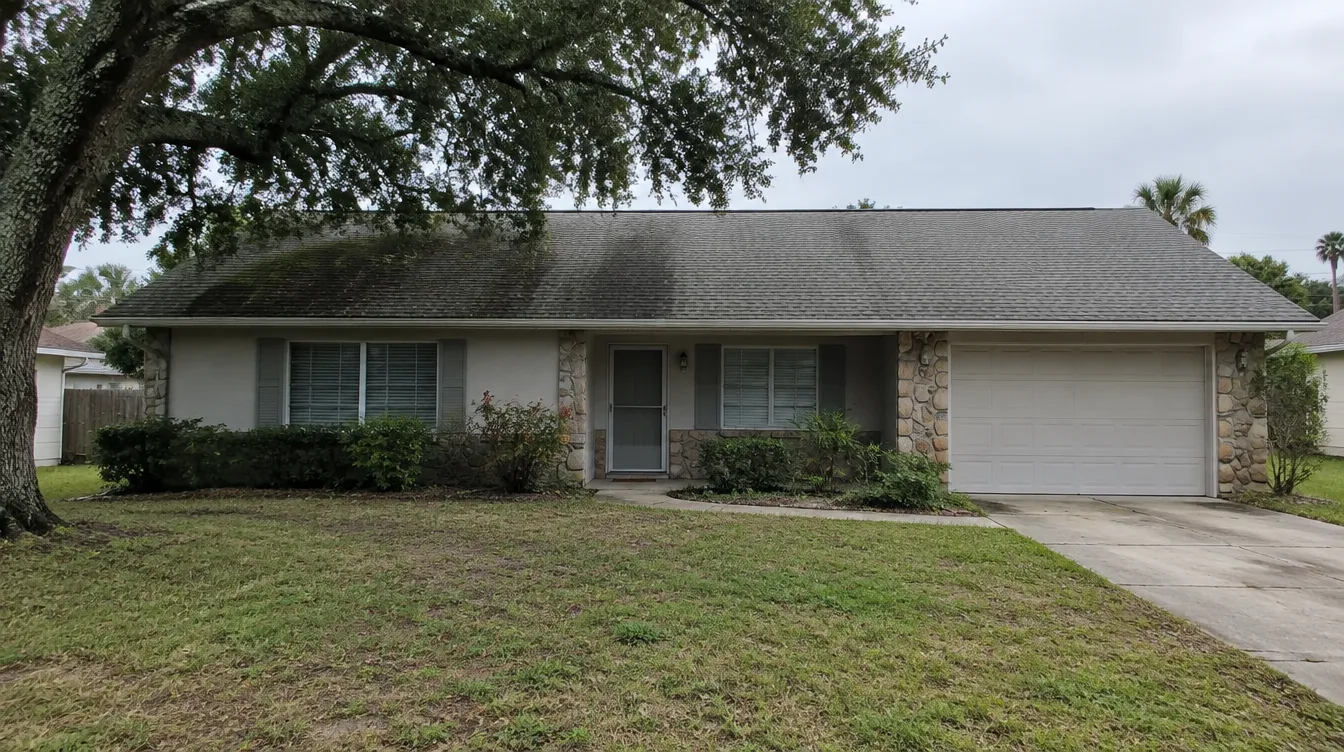
Those black streaks are a cyanobacteria called Gloeocapsa magma, usually called roof algae. It feeds on the limestone filler inside asphalt shingles and thrives in Gainesville's heat, humidity and shade. In most cases it is cosmetic and does not mean your roof is failing. It can be cleaned off safely and kept from coming back.
What causes black streaks on a roof?
Gloeocapsa magma spreads by airborne spores, carried by wind from roof to roof. Once it lands, it lives on the shingle surface and feeds on limestone, which manufacturers add to asphalt shingles as a filler.
Rain washes it downward as it grows, which is why it forms long vertical streaks instead of spots. Most homeowners mistake it for dirt, mildew or soot.
Why is it so common in Gainesville?
The algae needs moisture, warmth and shade. North Central Florida supplies all three for most of the year.
- Humidity. Roofs stay damp longer here than in dry climates, giving the algae time to grow.
- Tree canopy. Gainesville's oaks shade large sections of roof, and shaded shingles dry slowly.
- North-facing slopes. These get the least direct sun, so streaks usually appear there first. If only one side of your roof is streaked, that is almost always why.
Is roof algae damaging my roof?
Usually not, on its own. The algae itself is largely cosmetic, and a streaked roof with healthy shingles underneath does not need replacing.
The things to watch for are the problems that look similar, or that tend to show up alongside it:
| What you see | What it likely is | Is it a problem? |
|---|---|---|
| Black streaks running down the slope | Roof algae | Mostly cosmetic |
| Green, fuzzy, raised patches | Moss | Yes. It holds moisture and can lift shingles |
| Flat, crusty gray-green spots | Lichen | Yes. It holds moisture and is hard to remove |
| Bald patches showing dark asphalt | Granule loss | Yes. A sign the roof is aging |
| Curling or cracked shingles | Age and heat damage | Time to have the roof evaluated |
One more consideration for Florida homes: darker patches absorb more sunlight than clean shingles. On a hot roof, that is one more small load on your attic and your air conditioner.
How do I get rid of roof algae?
Cleaning works, as long as it is done gently.
Do not pressure wash your roof. High-pressure water strips the protective granules off asphalt shingles. Those granules shield the shingle from UV, so losing them shortens the life of the roof.
The safe method is a low-pressure application of a cleaning solution designed for roofs, followed by a gentle rinse. Because it involves working on a slippery, sloped surface, it is a job for someone insured to do it.
How do I keep black streaks from coming back?
Cleaning removes the algae, but without prevention it usually returns.
- Copper or zinc strips at the ridge. When it rains, water carries small amounts of metal down the roof, which inhibits algae growth. Copper generally outperforms zinc.
- Trim overhanging branches. More sun means a drier roof, and less leaf debris collecting on it.
- Algae-resistant shingles at replacement. These contain copper-coated granules that discourage growth. Their protection does wear down over time.
- Metal roofing. Standing seam metal contains no limestone filler, so it does not give the algae its food source.
What roofing does Godwin install that resists algae?
If your roof is due for replacement anyway, both of the systems we install address this directly.
| Atlas Pinnacle Pristine shingles | 26-gauge Gulf-Lok standing seam metal | |
|---|---|---|
| Algae protection | Scotchgard Protector, 15-year algae warranty | No limestone filler |
| Manufacturer warranty | 40 years | — |
| Wind rating | 130 mph | 140 mph |
| Typical install time | 1 to 2 days | 3 to 6 days |
Both meet Alachua County's 130 mph wind requirement, and our metal roofs exceed it. Godwin backs every install with its own transferable workmanship warranty: 5 years on shingles and 10 years on metal.
Frequently asked questions
Not sure what is on your roof?
If you cannot tell whether those streaks are harmless algae or a sign of something worse, Chris will tell you straight. Request a free quote and he will look at what is actually there.
Get a Free Roofing Inspection in Gainesville
Christopher Tenney personally handles every estimate. License CCC#1329478. No deposit required.
Written by Christopher Tenney, owner of Godwin Green Roofing. Chris is a Florida Certified Roofing Contractor (CCC#1329478), a 2008 University of Florida graduate, and president of the North Central Florida Roofing Association. Godwin Green Roofing has served Gainesville and North Central Florida since 1974.